

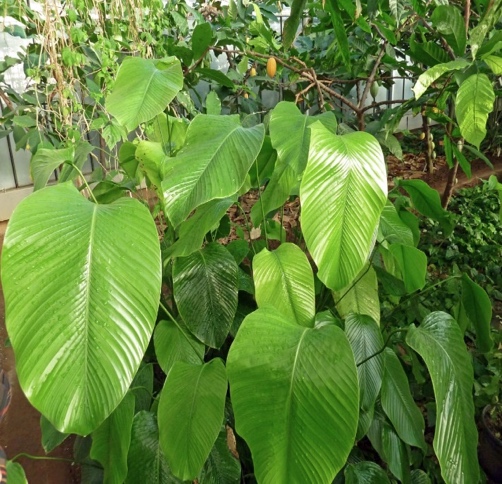
Chemical diversity, Antimicrobial, Antioxidant and Preservative Potentials of Crude Extracts of Trametespolyzonaan Endophytic Fungus found in ThaumatococcusdanielliiLeaves
Article Sidebar
Main Article Content
Abstract
Endophytic fungi are known to produce diverse bioactive metabolites that offer a promising avenue for drug discovery, with potential applications in developing new preservatives. This study aims to isolate bioactive metabolites from endophytic fungi to discover novel, sustainable preservatives, leveraging their natural ability to produce diverse compounds with potential industrial applications. Axenic culture of Trametes polyzonawas isolated from Thaumatococcus daniellii and fermented on local rice, and the ethyl acetate extract was subjected to preliminary antimicrobial and antioxidant assays and then a preservative test adopting the United State Pharmacopoeia USP-2004 protocol. Trametes polyzona appeared creamy-white on potato dextrose agar. The crude extract exhibited a broad-spectrum growth inhibition. Inhibition zones of 14, 12, 7, 4, and, 12 mm were recorded at 1000 µg/mL against Staphylococcus aureus, Bacillus subtilis, Escherichia coli, Pseudomonas aeruginosa, andAspergillus niger respectively. Also, T. polyzona crude extract exhibited good radical scavenging activity with inhibition of 69.70 % in comparison with quaercetin 73.40%. The extract exhibited moderate preservative efficacy against E. coli, P. aeruginosa, S. aureus, and, A. niger. Gas chromatography – Flame ionization Detector and Gas chromatography and mass spectroscopy analyses of the crude extract detected the presence of flavonoids (58.47%) and phenolics (9.22%) and Ethyl Iso-allocholate, 3-octyl-, cis-(Epoxyoleic acid), and Oxiraneoctanoic acid respectively. As a result, Thaumatococcusdanielli can be relied upon for fungal secondary metabolites for the development of effective preservatives.
Article Details

This work is licensed under a Creative Commons Attribution-NonCommercial 4.0 International License.
References
1. NicolettiR, and Fiorentino A. Plant Bioactive Metabolites and Drugs Produced by Endophytic Fungi of Spermatophyta. Agri. 2015; 5:918-970.
2. Selim K, El-beih A, Abdel-rahman T, and El-diwany A. Biology of Endophytic Fungi. Curr Res EnvAppl Myc. 2012; 2(1): 31–82.
3. Glienke C, Tonial F, Gomes-Figueiredo J, Savi D, Aparecida V.N, Sales Maia BHL, and Possiede MY. Antimicrobial Activity of Endophytes from Brazilian Medicinal Plants. InTech. 2012.
4. Okezie UM, Eze PM, Okoye FBC, and Esimone CO. Orthosporin, a major component of the fermentation product of Lasiodiplodiatheobromae- an endophytic fungus of Musa paradisiaca as a potential antimicrobial agent. Not Sci Biol. 2022; 14:2.
5. Eze PM, Nnanna JC, Okezie U, Buzugbe HS, Abba CC, Chukwunwejim CR, Okoye FBC, and Esimone CO. "Screening Of Metabolites From Endophytic Fungi Of Some Nigerian Medicinal Plants For Antimicrobial Activities. The Euro Biotech J.2019; 3:10-18.
6. Arivudainambi USE., Anand TD, Shanmugaiah V, Karunakaran C, and Rajendran A. Novel bioactive metabolites producing endophytic fungus Collectrichumgloeosporiodes against multidrug-resistant Staphylococcus aureus. FEMS Immunol Med. Microbiol.2011; 61: 340-345.
7. Strobel G, Daisy B, Castillu U, and Harper J. Natural Products from Endophytic Microorganisms. J. Nat. Prod. 2004; 67: 257-268.
8. Stroble G. and Daisy B. Biosprospecting for Microbial Endophytes and Their Natural Products. MicMol Bio Rev. 2003; 491 - 502.
9. Anurag K. and Arun B. N. Evaluation of preservative effectiveness of ferulic acid derivatives in aluminium hydroxide gel-usp. Int. J. Pharm. Sci. and Res. 2013; 4(7): 2721–2725.
10. Adebayo GJ and Kolawole LA. In vitro activity of Thaumatococcus daniellii and Megaphryniummacrostachyum against spoilage fungi of white bread and ‘ Eba ’, an indigenous staple food in Southern Nigeria. Afr. J. Microbiol. Res. 2010; 4(11): 1076–1081
11. Adeogun O, Adekunle A, and Ashafa A. Chemical composition, lethality and antifungal activities of the extracts of leaf of Thaumatococcus daniellii against foodborne fungi. Beni-Suef Univ. J. Basic Appl. Sci. 2016; 5(4): 356–368.
12. Kjer J, Debbab A, Aly AH, Proksch P. Methods for isolation of marine-derived endophytic fungi and their bioactive secondary products. Nat. Protoc. 2010; 5:479–490.
13. European Committee on Antimicrobial Susceptibility Testing, author. Breakpoint tables for interpretation of MICs and zone diameters. version 12.0. European Committee on Antimicrobial Susceptibility Testing; Växjö, Sweden: 2022.
14. British Pharmacopoeia. Aqueous cream. [Online] 2016 [Accessed 22nd September] 2016. Available at: https://www.pharmacopoeia.com/bp-2016/formulated-specific/aqueous-cream.html?date=2016-07-01&text=aqueous+cream
15. United States Pharmacopoeia. Antimicrobial effectiveness testing. United States Pharmacopeial Convention, Inc, Rockville. 2004; 2148-2150.
16. Kelly DA. and Nelson R. Characterization and quantification by gas chromatography of flavonoids. J. Braz. Chem. Soc. 2014; 25(2):238-245.
17. Bruce S, Bruce SO, Onyegbule FA, Ezugwu CO, Nweke ID, Ezenwelu CR, and Nwafor FI. Chemical Composition, Hepatoprotective and Antioxidant Activity of the Crude Extract and Fractions of the Leaves of FadogiaCienkowskiiSchweinf (Rubiaceae). Trop J Nat Prod Res. 2021; 5(4):720–731.
18. Oduntan OO. Assessment of the Bio Preservative Efficacy of Trametespolyzona (pers.) Extracts on Tomato Fruits. Int J Inn Sci Res Techn. 2020; 5(6):1206–1221.
19. Alexandre G, Jaubert J, Traversie N, Jerome L, Balu L, Garcia-Hermoso D, Stephane W, Favel A, Picot S, and Hoarau G. Trametespolyzona an emerging filamentous basidiomycete in Réunion Island. Myc. 2017; 60(6):412-415.
20. Williams LHLL. and Randolph PD. Antioxidant and antibacterial activity of Trametespolyzona ( Pers .) Justo. Food SciBiotec. 2020; 29(1), 27–33.
21. Baptista RC, Horita CN, and Sant'Ana AN. Natural products with preservative properties for enhancing the microbiological safety and extending the shelf-life of seafood: A review. Food Res Int. 2020; 127:108762.
22. Okaraonye CC. and Ikewuchi JC. Nutritional and antinutritional components of Pennisetumpurpureum (Schumach). Pak. J. Nutr. 2009; 8 (1):32-34.
23. Asif M. and Khodadadi E. Medicinal uses and chemistry of flavonoid contents of some common edible tropical plants. J. Paramed. Sci. 2013; 4(3):2008-4978.
24. Tapas AR, Sakarkar DM, and Kakde RB. Flavonoids as Nutraceuticals : A Review. Trop J Pharm Res. 2008; 7:1089–1099.
25. Guven H, Arici A, and Simsek O. Flavonoids in Our Foods : A Short Review Flavonoids in Our Foods : A Short Review. J B Clinicl H Sci. 2019; 3:96–106.
26. Kumar S. and Pandey AK. Chemistry and Biological Activities of Flavonoids: An Overview. The Sci W J. 2013; 162750.
27. Ekalu A. and Habila D. J. Flavonoids : isolation, characterization, and health benefits. Beni-Suef Univ. J. Basic Appl. Sci. 2020; 9:45.
28. Panche AN, Diwan AD, and Chandra SR. Flavonoids: An overview. J Nut Sci. 2016; 5:1–15.
29. Brodowska KM. Natural flavonoids: classification, potential role, and application of flavonoid analogues. Eur J Bio Res. 2017; 7(2): 108–123.
30. Bylka W, Matlawska I, and Pilewski NA. Natural Flavonoids as Antimicrobial Agents. J Ame Nut Asso. 2004; 7(2):24-31.
31. Beye C, Hiligsmann S, Tounkara L, and Thonart P. Anthocyanin content of two Hibiscus sabdariffa cultivars grown in Senegal. Agr Afr. 2017; 29(1):63–68.
32. Dilip G. and Tetsuya K. Anthocyanins and anthocyanin-rich extracts: role indiabetes and eye function. Asia Pac. J. Clin. Nutr. 2007; 16 (2):200-208
33. Gutiérrez-grijalva EP, López LX, Contreras-angulo LA, Elizalde-romero CA, and Heredia JB. Plant alkaloids: structures and bioactive properties. In MK Swamy (Ed.), Plant-derived Bioactives: Chemistry and Mode of Action. Spr Nat Singapore Pte Ltd. 2020; 85-117
34. Onuah CL, Chukwuma CC, Ohanador R, Chukwu CN, and Iruolagbe J. Trends in Applied Sciences Research Research Article Quantitative Phytochemical Analysis of Annonamuricata and Artocarpusheterophyllus Leaves Using Gas Chromatography-flame Ionization Detector. Acad J. 2019; 113–118.
35. Sarker SD, and Nahar L. Chemistry for Pharmacy Students General, Organic and Natural Product Chemistry. Northern Ireland, UK: John Wiley and sons Inc. www.wiley.com. 2007.
36. World Health Organization. WHO Guidelines for malaria treatment. [Online] 2021 [Retrieved from] http://www.ghbook.ir/index.php?name=&option=com_dbook&task=readonline&book_id=13650&page=73&chkhashk=ED9C9491B4&Itemid=218&lang=fa&tmpl=component 2021. 2021.
37. Villalpando-vargas F. and Medina-ceja L. Sparteine as an anticonvulsant drug: Evidence and possible mechanism of action Seizure. 2016; 39:49–55.
38. Muthulakshmi A, Jothibai MR and Mohan VR. GC-MS Analysis of Bioactive Components of Feroniaelephantum Correa (Rutaceae). J Appl Pharm Sci. 2012; 02 (02):69-74.
39. Malathi K, Anbarasu A. and Ramaiah S. Ethyl iso-allocholate from Medicinal Rice Karungkavuni Inhibits Dihydropteroate Synthase in Escherichia coli: A Molecular Docking and Dynamics Study). Indian J Pharm Sci. 2016; 78 (6):780-788.
40. Idan SA, AL-Marzoqi AH, Hameed IH. Spectral analysis and anti-bacterial activity of methanolic fruit extract of Citrulluscolocynthis using gas chromatography mass spectrometry. Afr. J. Biotechnol. 2015; 14:46
41. Hussein JH, Mohammed YH, and Imad HH. Study of chemical composition of Foeniculumvulgare using Fourier transform infrared spectrophotometer and gas chromatography - mass spectrometry. J of Pharm. Phyto. 2016; 8(3):60-89.
42. Rabbi F, Zada A, Adhikari A, Nisar A, Ullah Khan F, and Sohail M. GC-MS Analysis, Metal Analysis and Antimicrobial Investigation of Sterculiadiversifolia. Pharm Chem J. 2020; 54:9.
43. Mridha A, Gopal PK, and Paul S. Screening Data Reveals that Spirogyra triplicata, a Fresh Water Algae Induces Robust Anti-Proliferative Activity Against A549Cells. Pharmacogn J. 2020; 12(3):569-577.
44. Rahman MM, Ahmad SH, Mohamed MTM. andAbRahman M.Z. Antimicrobial compounds from leaf extracts of Jatrophacurcas, Psidiumguajava, and Andrographispaniculata. The Sci W J. 2014; 635240.
45. Kadhim MJ, Al-Rubaye AF, &Hameed IH. Determination of Bioactive Compounds of Methanolic Extract of Vitisvinifera Using GC-MS. Int J Tox. Pharm Res. 2017; 9(2): 113-126.